
Most immediately, he pledged to move slowly if needed in winding down an oil window that provides dollars directly to state-run oil companies
The previous bout of Fed withdrawal fears had threatened to spark a crisis of confidence in India -- sending the rupee to a record low of 68.85 in late August and leading to steep falls in bonds and stocks.
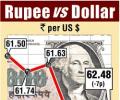
The rupee was also pressured as the euro fell for a second day on Friday, hurt by the European Central Bank's surprise interest rate cut and a downgrade to France's credit rating, while the dollar inched up before a key US jobs report.

S&P is the only of the three major credit agencies with a 'negative' outlook on India.
.jpg)
In the global market, the dollar was quoted lower in the early trade with investors looking ahead to the following day's European Central Bank policy decision.

Forex dealers said besides dollar gaining against other currencies in the global markets, increased demand for the American currency from importers and lower opening in the domestic equity market influenced the rupee.
The rupee which has been relatively stable over the last couple of months after having seen as much as 20 percent fall to a record low in late August has been boosted mainly by robust foreign fund inflows into the stock market.

The partially convertible rupee closed at 61.2350/2450 per dollar compared with 61.31/32 on Tuesday.
The RBI's macroeconomic report released after the close of markets said upside risks to food inflation remain and that it expects the retail and wholesale price inflation to remain above comfort levels.

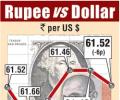
The Indian currency resumed lower at 61.50 per dollar as against the last closing level of 61.46 at the Interbank Foreign Exchange Market.
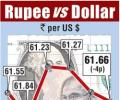
Dealers attributed the fall in rupee to gains made by US dollar against the euro and other overseas currencies ahead of US jobs data and a lower opening in the domestic equity market.
.jpg)
The plan being negotiated by US Senate leaders would end a partial government shutdown and raise the debt ceiling by enough to cover the nation's borrowing needs at least through mid-February 2014, a source familiar with the negotiations told Reuters.

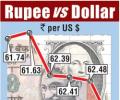
The rupee resumed lower at 61.15 per dollar as against the last weekend's level of 61.07 at the Interbank Foreign Exchange market and hovered in the range of 61.15 and 61.28 before quoting at 61.24 per dollar at 1030 hours.
.jpg)
Sentiments turned buoyant after RBI on Monday cut the marginal standing facility rate, at which it lends emergency funds to banks, by 0.5 per cent to 9 per cent with an aim to improve liquidity and boost economic activities.
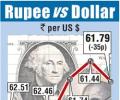
Traders say the rupee and other global currencies will likely track the continued uncertainty in the US budget stalemate and government shutdown.

Global currency market sentiment is likely to be driven by the US deficit and debt ceiling negotiations, with markets likely to turn more risk averse closer to October 17, the date by which the US Congress must approve raising the country's borrowing limit.

The improvement in the current account deficit is expected to provide a major reprieve to the government and the Reserve Bank of India which have been battling to prop up the rupee.

The RBI recently met with a handful of foreign banks and asked them to stop acting as market-makers for rupee NDFs, according to three bankers involved in the discussions.

The RBI's comments, announced after trading hours on Wednesday, comes as yields had risen by 60 basis points after a surprise hike in the repo rate on Friday and on worries about the fiscal second borrowing programme of the government.
.jpg)
The partially convertible rupee closed at 63.37/38 per dollar compared with 62.83/84 on Monday. The unit dropped 0.85 per cent on the day, its biggest single-day fall in two weeks.
